


Why Everyone Else’s Life Looks Better Than Yours
- 6 days ago
- 6 min read
You open your phone for a quick scroll, and within minutes, it feels like everyone else is doing better than you. People posting promotions, luxury trips, perfect bodies, happy relationships, and “dream lives” fill your feed. Meanwhile, you are sitting with your insecurities, stress, bad days, and unanswered questions. Social media has made it easier than ever to compare the messy, unfiltered “behind the scenes” realities of your life to everyone else’s carefully
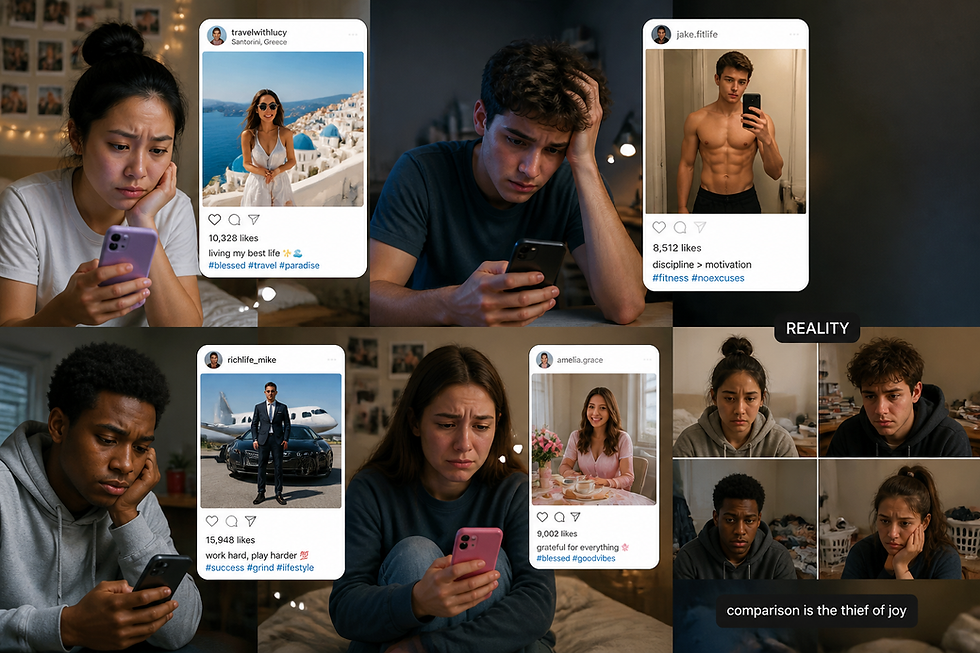
That constant comparison can gradually shape your self-worth, emotional health, mental health, and identity in ways many people do not realize.
We Were Never Meant to See Everyone’s Best Moments All the Time
Before social media, comparison existed in smaller circles. People compared themselves to classmates, coworkers, celebrities in magazines, or neighbors down the street. Today, we compare ourselves to millions of people every day.
In one scroll, you can see someone:
traveling to Bali;
sharing luxury lifestyles;
buying new gadgets, shoes, and clothes; or
showing off their perfect body.
We do not see the panic attacks, debt, loneliness, arguments, burnout, insecurities, failed relationships, and sleepless nights behind those posts.
That imbalance changes how we see ourselves. When we constantly place our ordinary moments beside someone else’s “best day,” our lives can start to feel small, boring, or unsuccessful, even when they are perfectly normal.
The Highlight Reel Effect
Social media platforms reward visibility, aesthetics, and emotional reactions. People naturally post moments that make them look attractive, accomplished, happy, funny, or successful.
This creates what psychologists often call the “highlight reel effect.”
But the human brain often forgets this. Instead of seeing content as a curated snapshot, we unconsciously treat it as evidence of how everyone else lives all the time. That is where comparison becomes dangerous.
Why Social Media Hits Self-Worth So Hard
Comparison becomes emotionally painful because social media targets these deeply human needs:
Belonging
Validation
Identity
Status
Attraction
Achievement
Social approval
Every like, share, comment, and follow can feel like a measurement of value.
For teenagers and young adults, especially, online identity can become closely linked to self-esteem. If a post performs badly, it can feel personal. If someone else receives more attention, admiration, or success, insecurity grows.
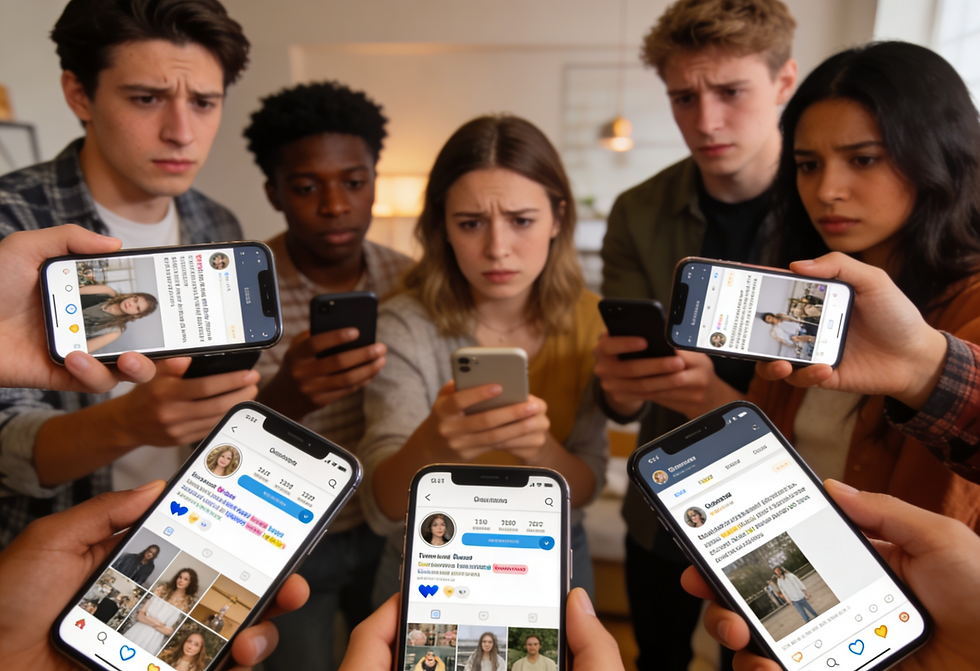
This creates a cycle where you compare yourself to others, start feeling inadequate, and then seek validation online to feel better temporarily, only to fall back into comparison shortly after.
The Mental Health Cost of Constant Comparison
Research increasingly connects excessive social media use with anxiety, depression, loneliness, and lower self-esteem, especially when scrolling and comparison drive your time online.
You may start feeling anxious about “falling behind” in life. You may struggle with body image because of unrealistic beauty standards and heavily edited photos. You may also experience fear of missing out (FOMO) when you constantly see other people socializing, traveling, or succeeding.
Over time, social media can make it feel like everyone else is moving faster, achieving more, and living better than you, even when that perception is incomplete or inaccurate.
The “Always On” Pressure
Social media has blurred the line between your public and private life, making you feel pressure to document experiences, stay relevant, look productive, entertain others, and appear happy all the time. Even rest can start to feel performative online, where instead of simply enjoying a moment, you may catch yourself wondering, “Would this make good content?” Over time, that mindset can change your relationship with yourself and contribute to emotional burnout, causing experiences to feel less about personal meaning and more about visibility and approval.
Why Young People Are Especially Vulnerable
If you grew up with social media, it’s likely you formed much of your identity online.
That matters because adolescence is already filled with insecurity, self-discovery, emotional sensitivity, and peer pressure. Social media intensifies all of it. You are no longer comparing yourself only to classmates. You are comparing yourself to influencers, celebrities, entrepreneurs, athletes, and creators from around the world.
This produces impossible standards. You may start feeling pressure to become attractive, successful, wealthy, productive, and socially admired before adulthood even begins.
The Algorithm Wants You to Compare
Most social media platforms are designed to maximize attention and engagement.
Content that triggers emotion—especially envy, desire, outrage, or insecurity, often performs well. That means algorithms repeatedly push luxury lifestyles, beauty content, relationship goals, and success stories because emotionally reactive users stay online longer.
Comparison is not entirely accidental. In many ways, it is built into the system.
Relearning Self-Worth Offline

The solution is not necessarily deleting every app forever. Social media can still provide creativity, entertainment, education, and social connection. The real challenge is rebuilding your identity outside the algorithm.
Healthy self-worth comes from relationships, purpose, values, emotional resilience, and self-understanding, not from metrics. Likes are not love. Followers are not necessarily friends. Views are not validation.
The more you create healthy boundaries between online performance and personal value, the healthier your relationship with social media becomes.
Practical Ways to Reduce Harmful Comparison
Curate Your Feed - Unfollow accounts that consistently trigger insecurity or unhealthy comparison.
Limit Passive Scrolling - Mindless scrolling tends to increase comparison more than meaningful interaction.
Spend More Time Offline - Real-world hobbies, movement, friendships, and experiences help reconnect your identity to reality rather than performance.
Remember That Content Is Curated - Most people post selected moments, not full lives.
Focus on Internal Goals - Prioritize fulfillment, growth, and well-being over visibility and online approval.
How Talent Transformation Can Help
Understanding yourself beyond social media validation is one of the strongest ways to protect your mental health and build confidence. The Foundation for Talent Transformation offers assessments designed to improve self-awareness, emotional resilience, communication, and personal growth, including:
Emotional Intelligence Quiz – helps strengthen your emotional awareness, empathy, and resilience when dealing with comparison and online pressure.
Life Satisfaction Quiz – highlights areas of fulfillment and well-being so you can focus on meaningful growth instead of online validation.
Identity Quiz – helps you better understand how personal and social influences shape your self-image and choices.
Personality Traits Quiz – encourages self-development aligned with your authentic strengths rather than internet trends.
Cognitive Biases Quiz – raises awareness of unhealthy thinking patterns that social media comparison can reinforce.
Communication Styles Quiz – improves self-expression and relationship skills, helping reduce misunderstandings and social pressure online.
These tools can help you build a stronger sense of identity and self-worth rooted in real life rather than likes, followers, or online approval.
Takeaways
Social media changed comparison from an occasional human behavior into a nonstop daily experience. The danger comes from comparing ordinary human struggles to edited highlight reels that rarely show the full reality behind the screen. While social media can still offer connection and creativity, maintaining mental health in the digital age requires stronger self-awareness, healthier boundaries, and a sense of identity rooted in real life rather than online validation.
FAQ
Why does social media make you feel insecure?
Social media encourages comparison by constantly showing idealized and curated content. You may end up comparing your real life to polished versions of other people’s lives.
Can social media affect your mental health?
Yes. Excessive comparison and validation-seeking online have been linked to anxiety, depression, loneliness, low self-esteem, and body-image concerns.
What is the “highlight reel” effect?
The highlight reel effect occurs when people mostly share positive, polished, or impressive moments online, creating an unrealistic picture of everyday life.
Is deleting social media the only solution?
No. Many people benefit more from healthier boundaries, curated feeds, reduced screen time, and stronger offline relationships.
References and Citations
Vogel, Erin A., et al. “Social Comparison, Social Media, and Self-Esteem.” Psychology of Popular Media Culture, vol. 3, no. 4, 2014, pp. 206–222.
Fardouly, Jasmine, and Lenny R. Vartanian. “Social Media and Body Image Concerns: Current Research and Future Directions.” Current Opinion in Psychology, vol. 9, 2016, pp. 1–5.
Twenge, Jean M., and W. Keith Campbell. “Associations Between Screen Time and Lower Psychological Well-Being Among Children and Adolescents.” Preventive Medicine Reports, vol. 12, 2018, pp. 271–283.
Festinger, Leon. “A Theory of Social Comparison Processes.” Human Relations, vol. 7, no. 2, 1954, pp. 117–140.
Hunt, Melissa G., et al. “No More FOMO: Limiting Social Media Decreases Loneliness and Depression.” Journal of Social and Clinical Psychology, vol. 37, no. 10, 2018, pp. 751–768.



.png)